


BEL APPART LE CANNET.COM
--------------------------------------------------------------------------------------------
RENTAL OF FURNISHED APARTMENTS
IN THE CITY OF CANNET

BEL APPART LE CANNET.COM
--------------------------------------------------------------------------------------------
RENTAL OF FURNISHED APARTMENTS
IN THE CITY OF CANNET
Belappartlecannet.com

Do you want to discover the most beautiful villages and towns on the French Riviera?
The ones that make you dream?
Here is a selection of the most stunning places in the Alpes-Maritimes just for you
A Flower-Filled Gem...
Nestled on the lower slopes of the Massif des Maures, Bormes-les-Mimosas is one of the most charming villages in the Var. Its old village is perched at an altitude of around 150 metres, overlooking the plain, La Favière and the Mediterranean, with the Îles d’Or visible offshore.
Bormes is above all a village to be explored on foot and at a leisurely pace. Its charm comes as much from its historic monuments as from its maze of cobbled lanes, houses with ochre and pastel façades, fountains, stairways, vaulted passageways and exceptional vegetation. More than 700 different plant species can be found throughout the village. In winter, mimosa covers the hillsides with colour from January to March, while during the warmer months, bougainvillea and hibiscus are among the many flowers that take over.
The Heart of the Medieval Village
The best way to explore Bormes is to gradually make your way uphill through the village, following its narrow streets rather than looking for the most direct route.
Rue Carnot is one of the main streets of old Bormes. Today, it is a lively street lined with shops, craftspeople and local designers. Historically, it also marks the boundary between the medieval part of the village to the north and its later expansion towards the south. Several old doorways can still be seen along the street, including one bearing the date 1577.
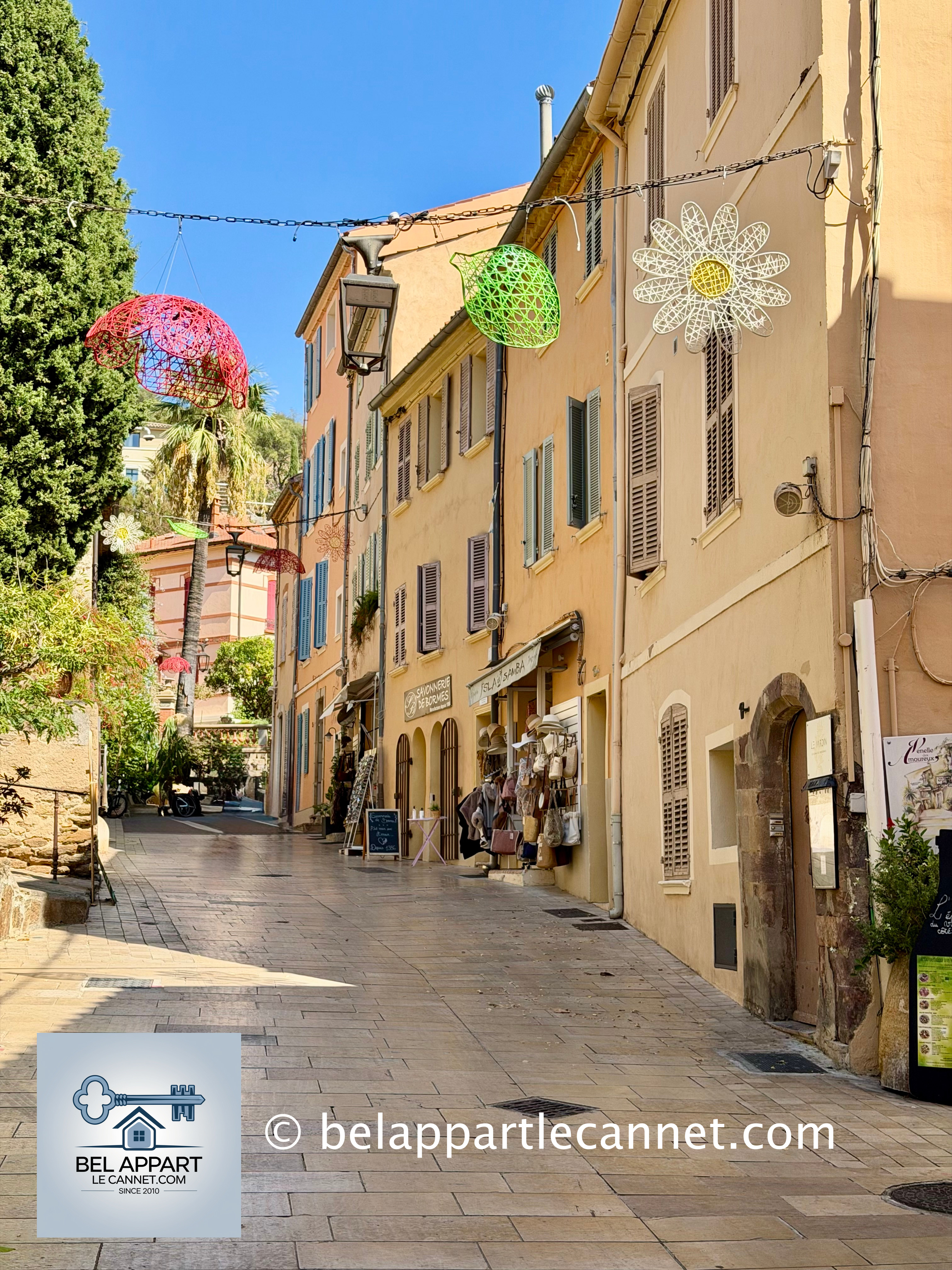
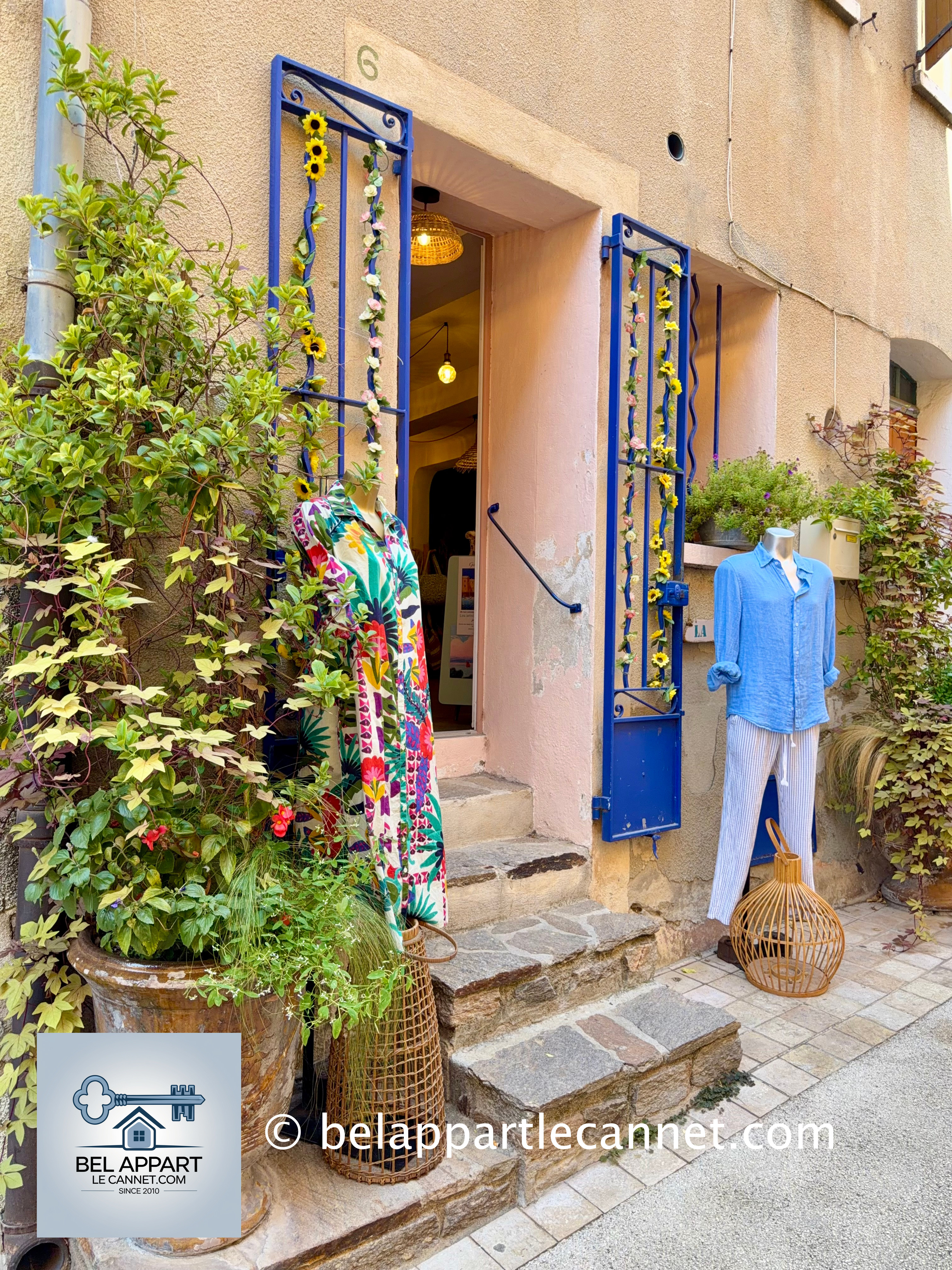
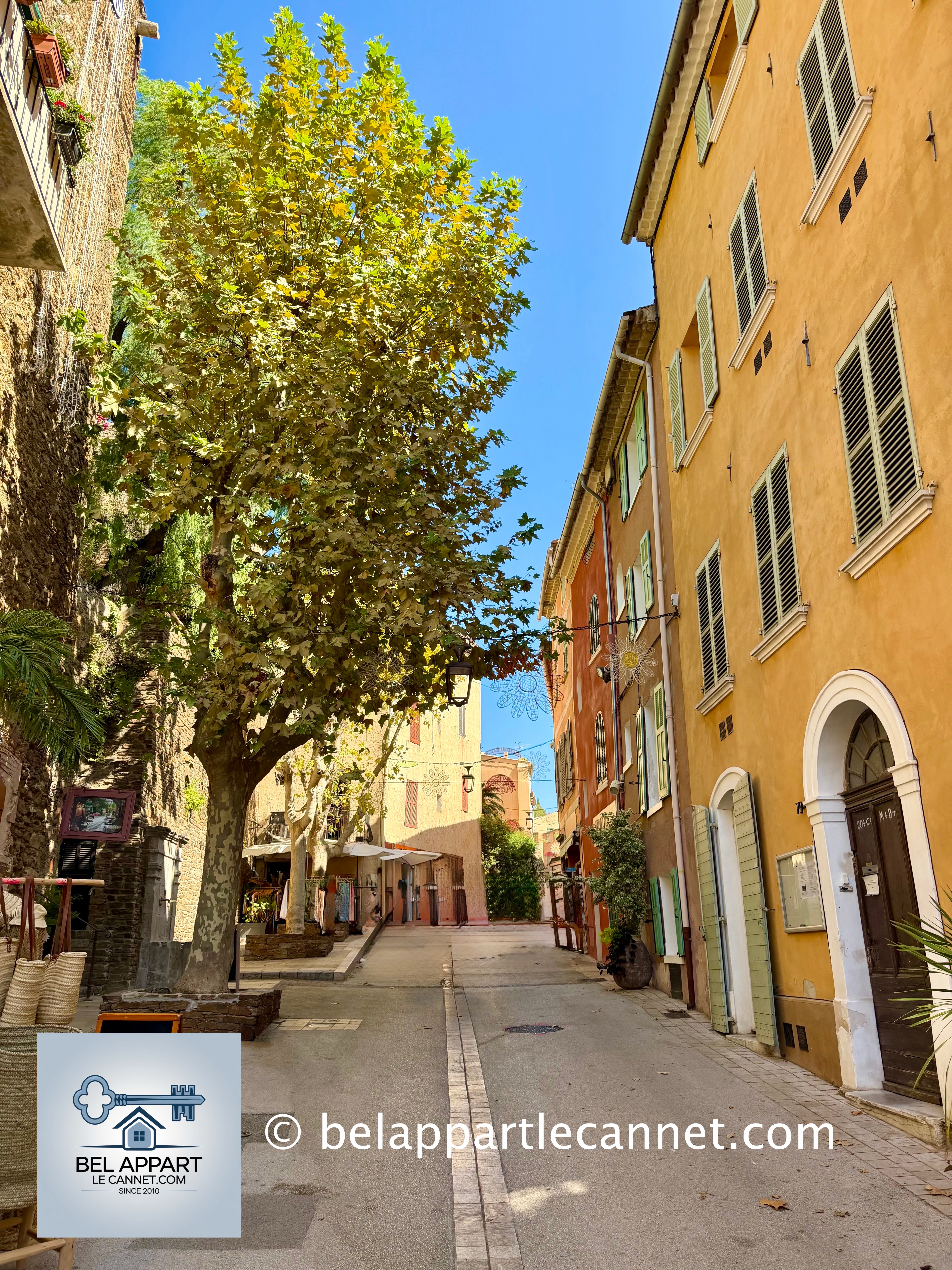
Rue Rompi Cuou
Be sure not to miss Rue Rompi Cuou, whose Provençal name could rather freely be translated as “the street where you break your backside”, or, a little more elegantly, “the street where you might break your neck!”
You will find it on the left near the beginning of Rue Carnot. It is one of the most picturesque little streets in Bormes, but also one of the steepest: 83 steps lead down towards the lower part of the village.
Along the way, you will pass local craftspeople, lush vegetation, old façades and traditional covered passageways known as cuberts, all adding to the charm of the descent.
A word of caution, however: the stones can sometimes be slippery... so this is definitely not the time to find out whether Rompi Cuou lives up to its name!
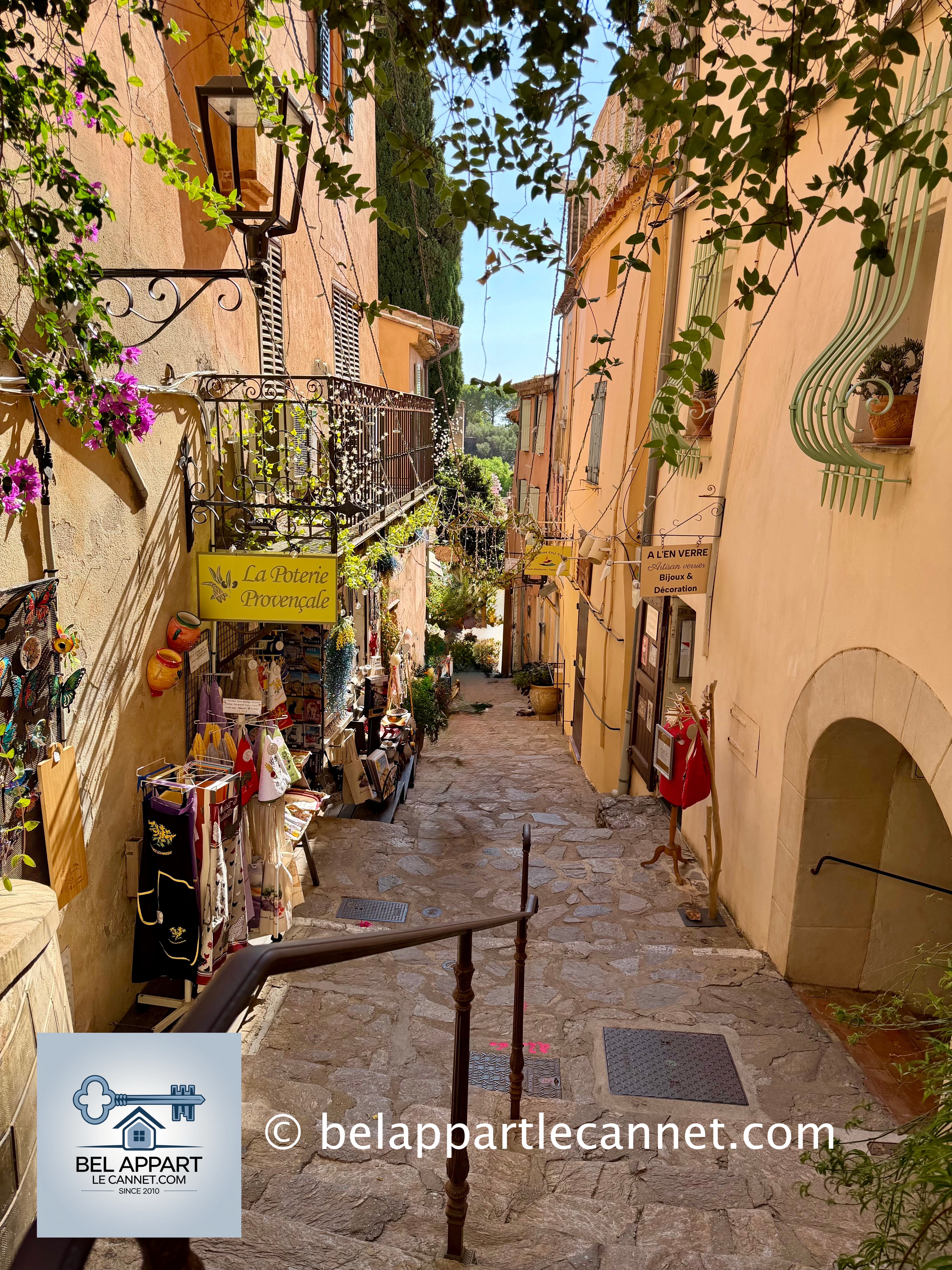
But some of the most charming places are often hidden just around the corner.
The “Cuberts” : A Distinctive Feature of Bormes
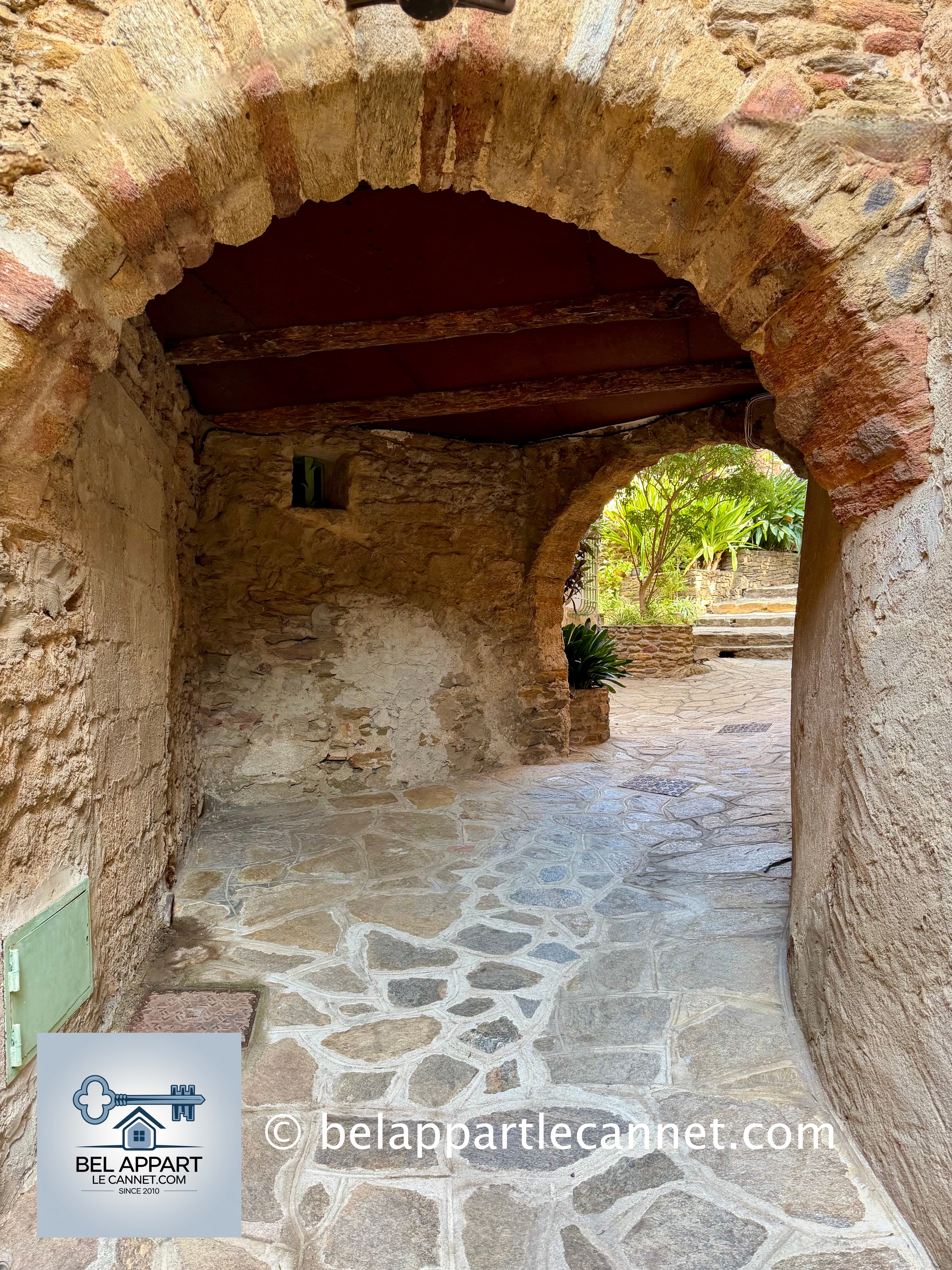
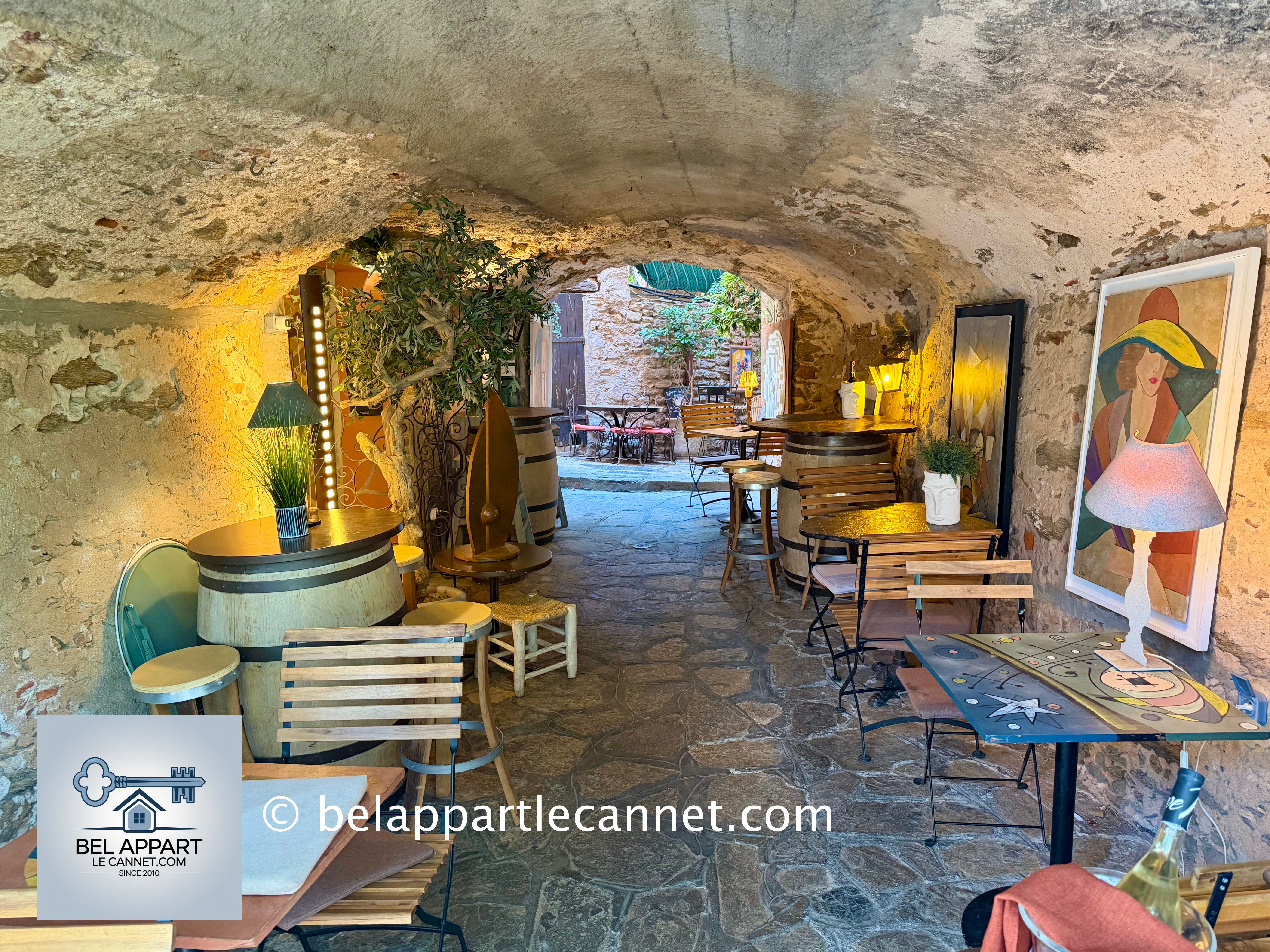
As you wander through the village, you will regularly pass beneath unusual covered passageways built under the houses, known locally as “cuberts.”
They are one of the distinctive features of old Bormes. In the past, they made it easier to move through the village while allowing the space above the passageways to be incorporated into the houses. They were also used for storing hay for animals.
These vaulted passageways, together with the stone stairways and flower-filled lanes, give the historic centre much of its unique character and charm.
Place du Poulid Cantoun
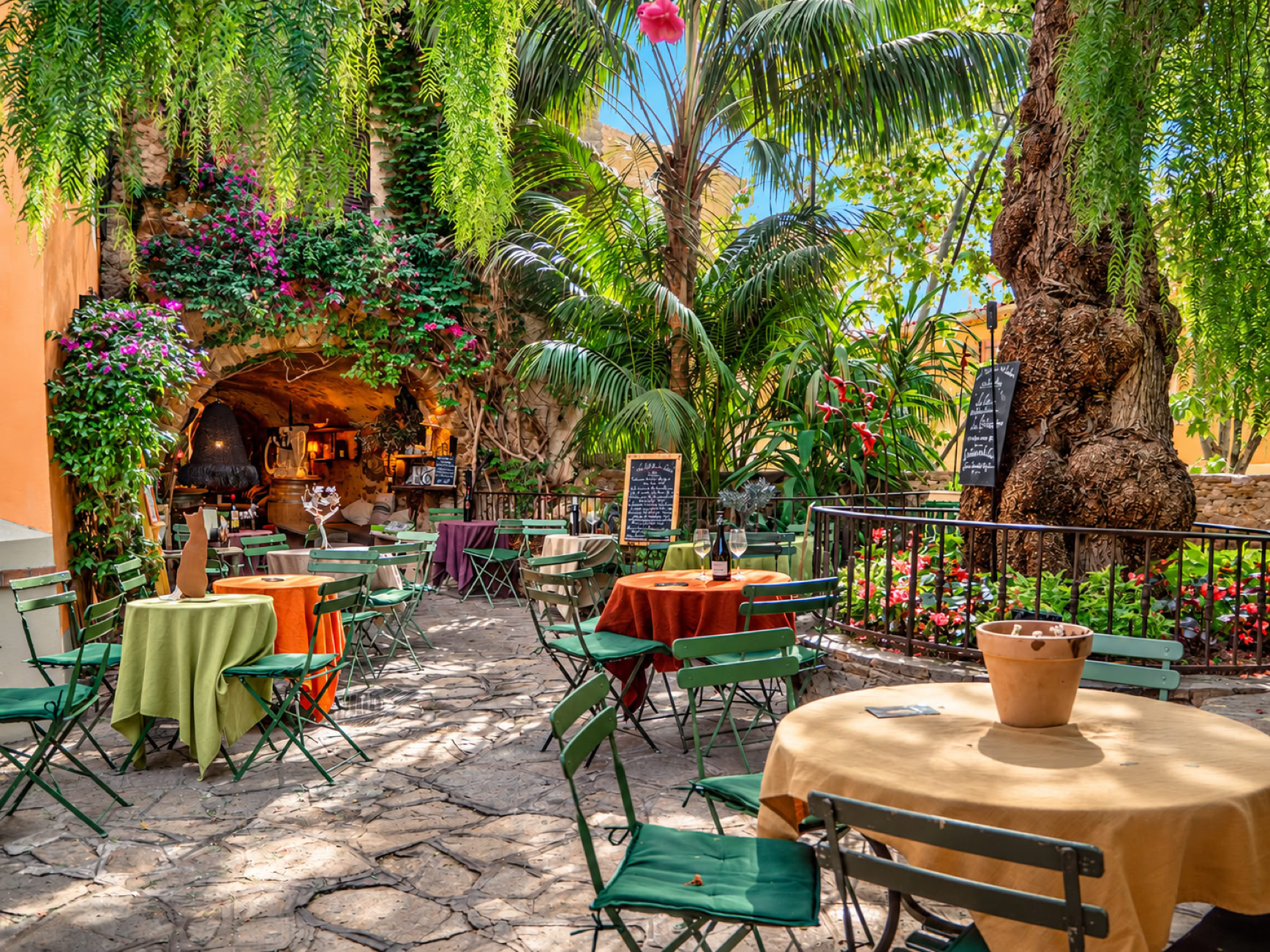
Its name charmingly means “the pretty corner”, and the square certainly lives up to its name.
This small square is particularly pleasant, surrounded by lush vegetation including colourful bougainvillea and an impressive rubber tree.
It is also a wonderful place to discover several reminders of old Bormes, including the 18th-century Clock Tower, a former watchtower and remains of the village’s medieval ramparts.
Saint-Trophyme Church
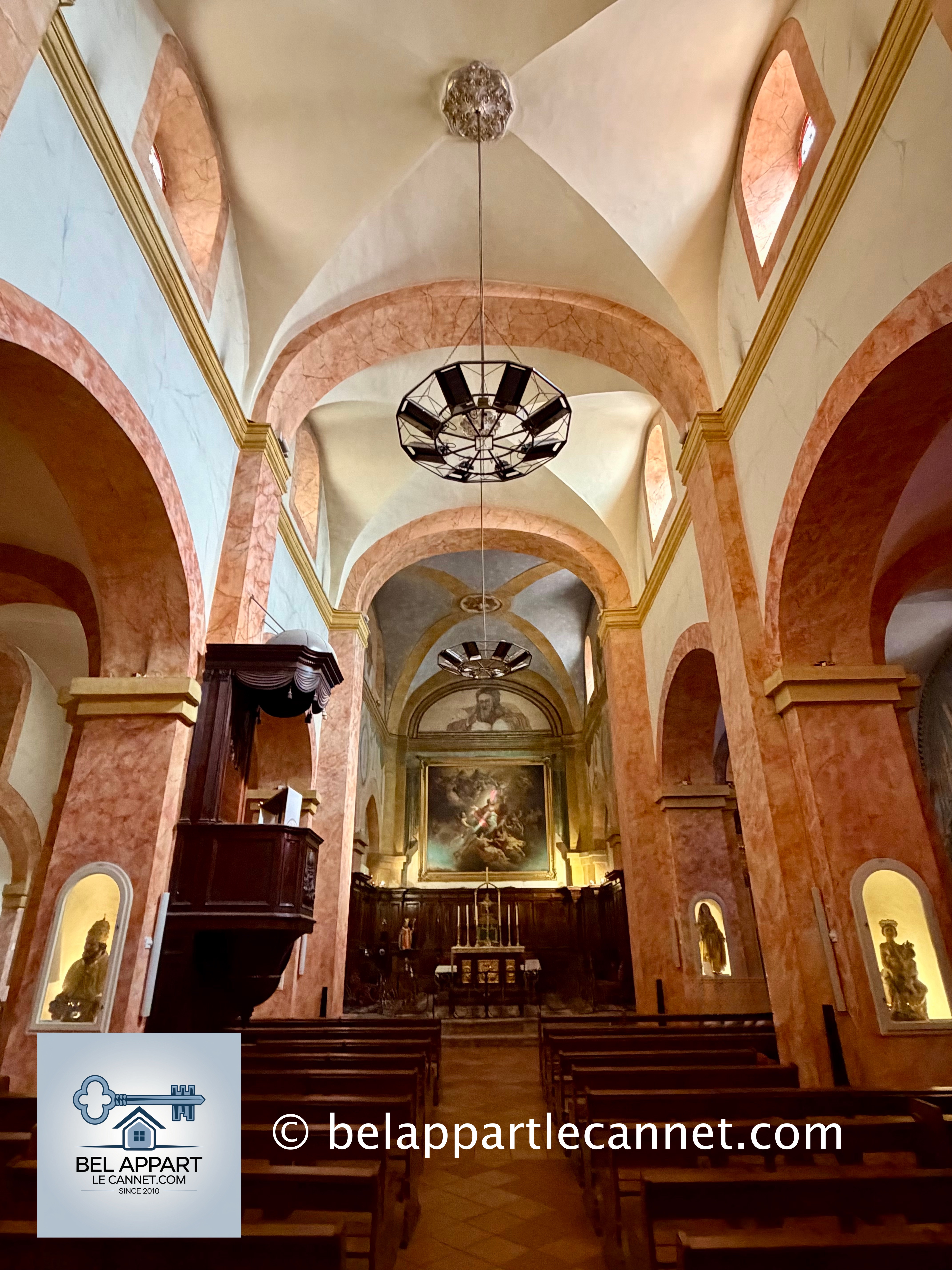
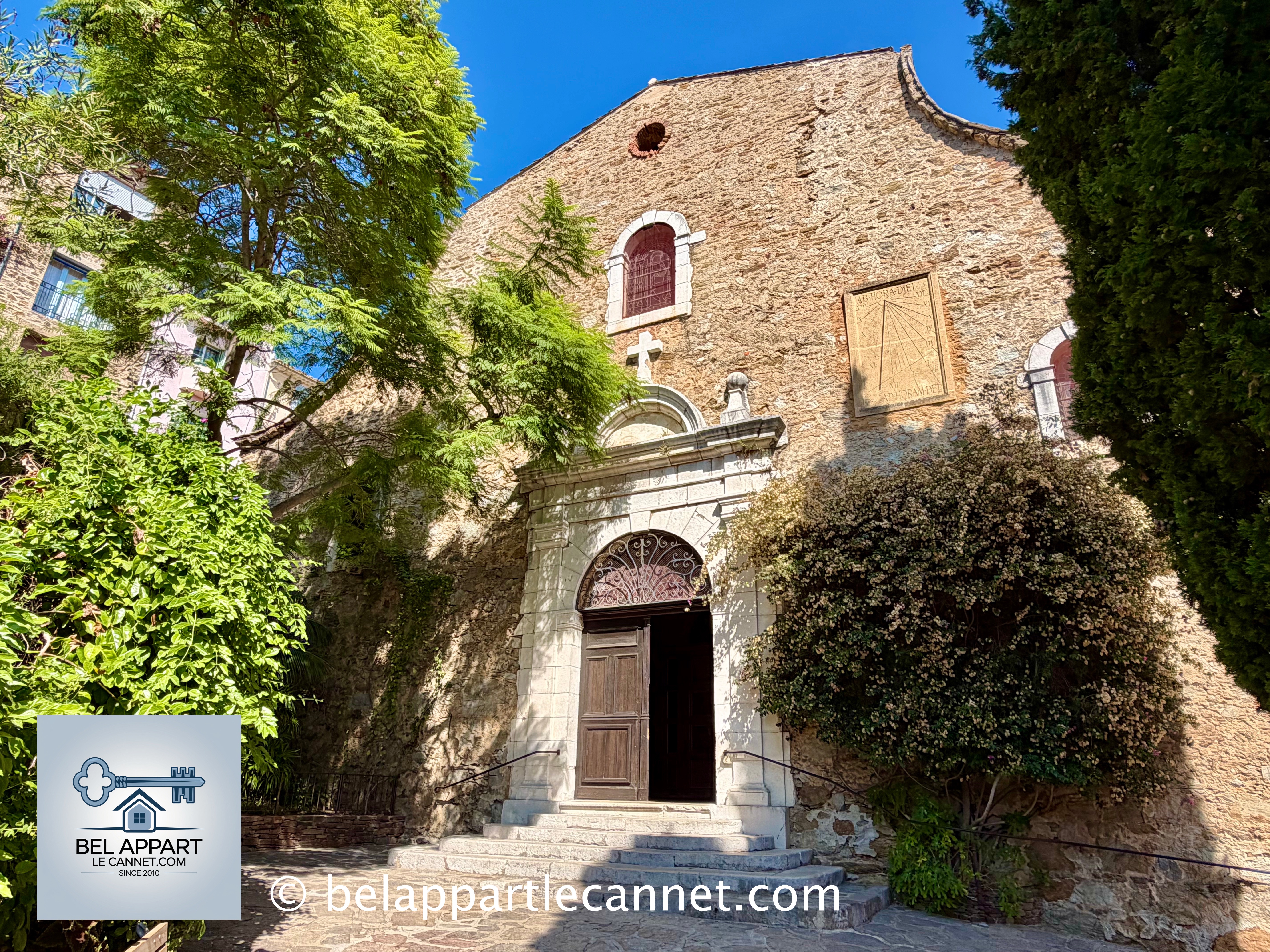
By the 18th century, the old church located below the castle had become too small and difficult to access. It was therefore decided to build a new church. The foundation stone was blessed in 1775, and the building was completed in the years that followed.
The church’s history includes an unusual episode: during the French Revolution, in 1794, it was converted into a “Temple of Reason” before being returned to Catholic worship shortly afterwards.
The Castle of the Lords of Fos
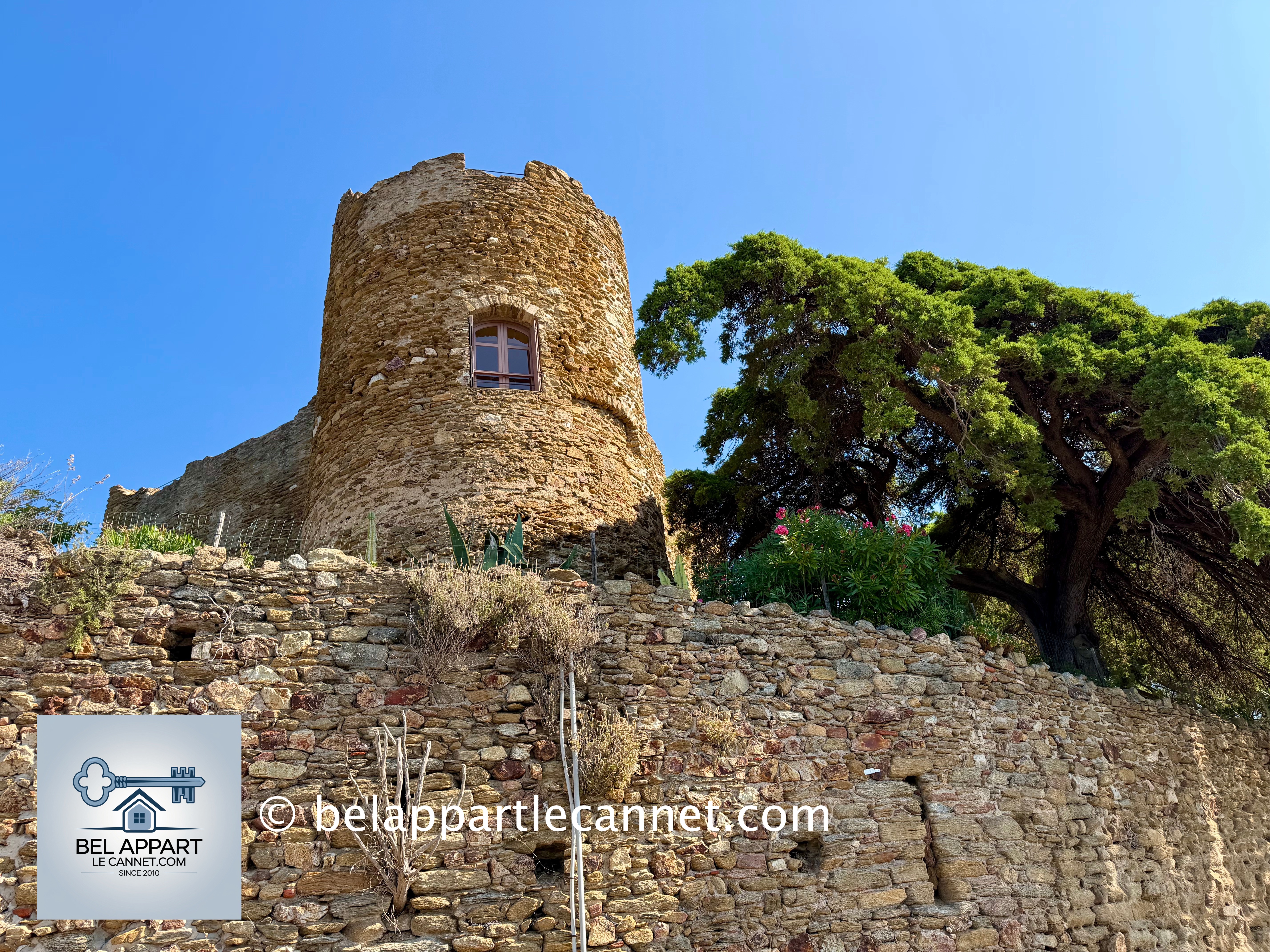
As you continue uphill, you will reach the monument that dominates the entire village: the Castle of the Lords of Fos.
The present castle was built between the 13th and 14th centuries, although the fortified history of Bormes dates back much further. The Lords of Fos settled here in 1257, and the castle remained associated with the lords of Bormes until the French Revolution. During the 17th century, it also became home to members of the Order of Minims.
Over the centuries, the former feudal fortress gradually changed its purpose. The castle was notably converted into a convent and remained almost intact until 1792. During the French Revolution, it was then used as barracks for volunteers joining the armies of the Republic. This new use marked the beginning of its decline and gradual deterioration.
The castle has been listed as a Historic Monument since 1931. Over time, it passed into the hands of several different families before eventually becoming private property, a status it retains to this day.
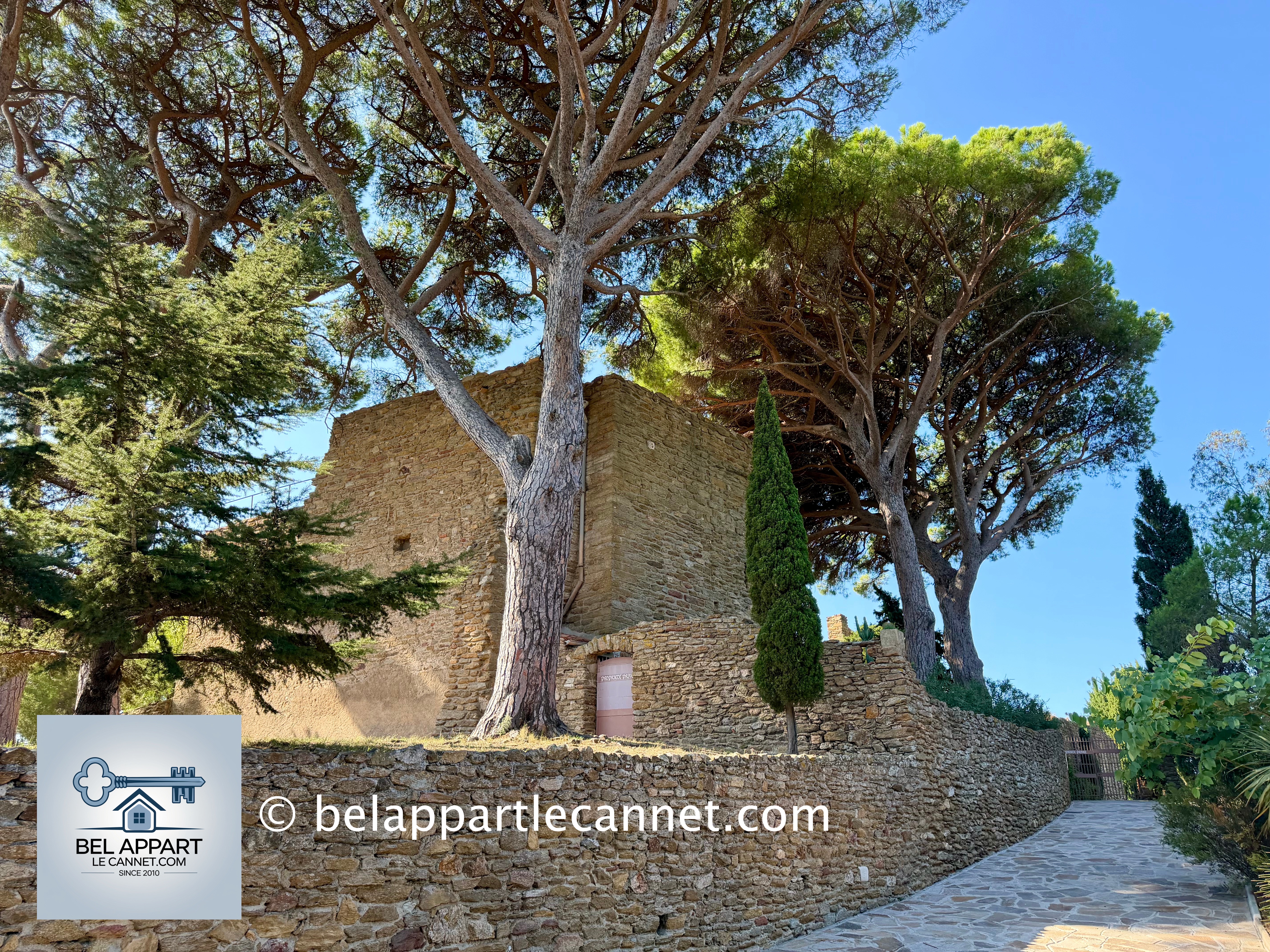
It is therefore not open to visitors, but you can still admire its imposing walls, tower, ramparts and ancient arrow slits from the outside.
Although the historical and archaeological interest of the remains of the castle and former convent is relatively limited, their picturesque appeal is remarkable. The silhouette of the fortress rising above the rooftops of old Bormes, surrounded by Mediterranean vegetation with the sea as a backdrop, is one of the village’s most iconic views.
The Castle Esplanade and Its Panoramic View
Even though the castle itself is not open to visitors, you should definitely make your way up to its esplanade.
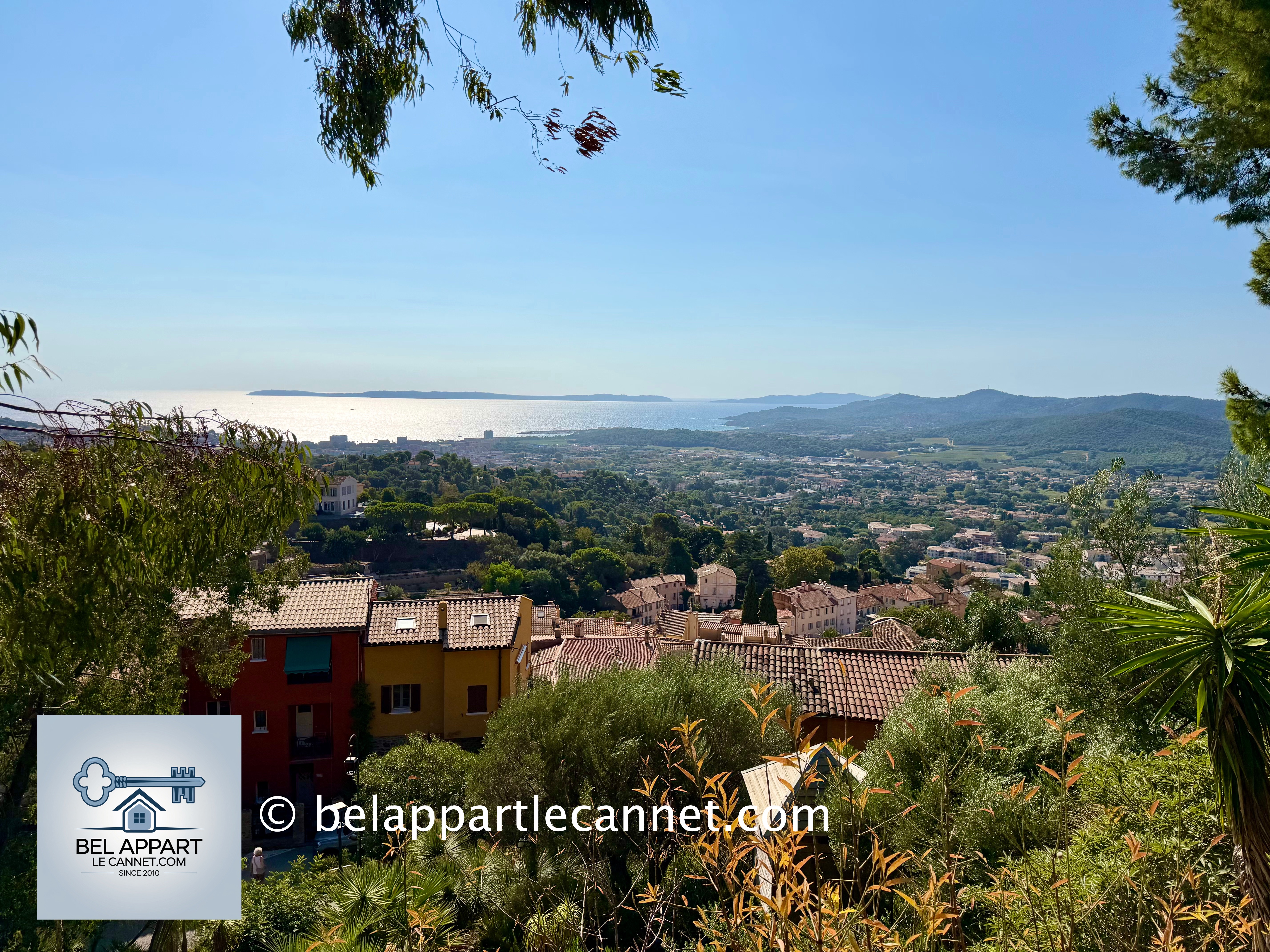
This is the highest point of the old village and offers one of the finest panoramic views in Bormes. From here, you can look out over the Batailler plain, La Favière, the harbour and Cap Bénat. On a clear day, the view stretches as far as the Îles d’Or, with Port-Cros to the west and the Île du Levant to the east.
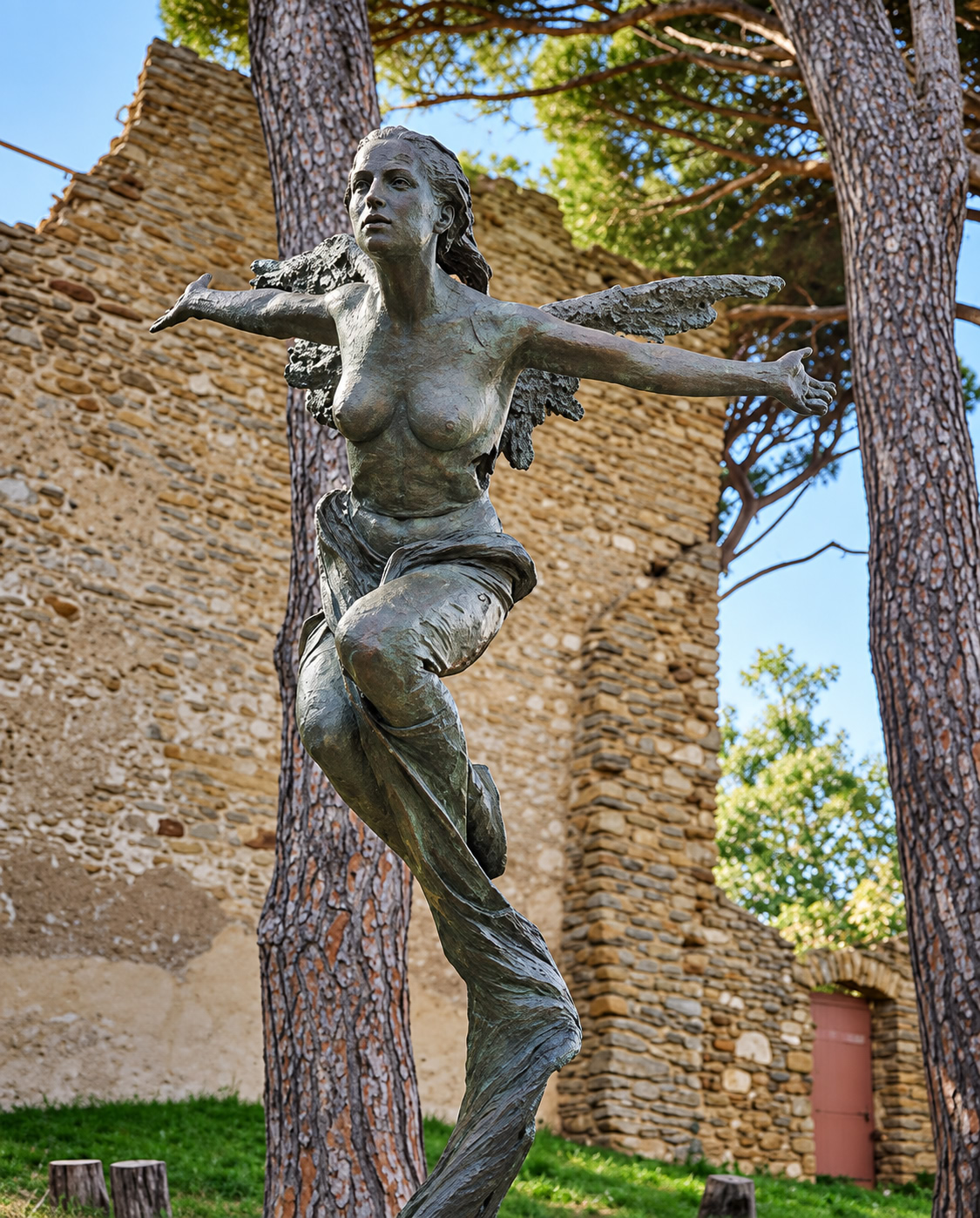
You will also discover La Victoire, an impressive contemporary sculpture by Christophe Charbonnel, installed here in 2017.
Saint-François-de-Paule Chapel
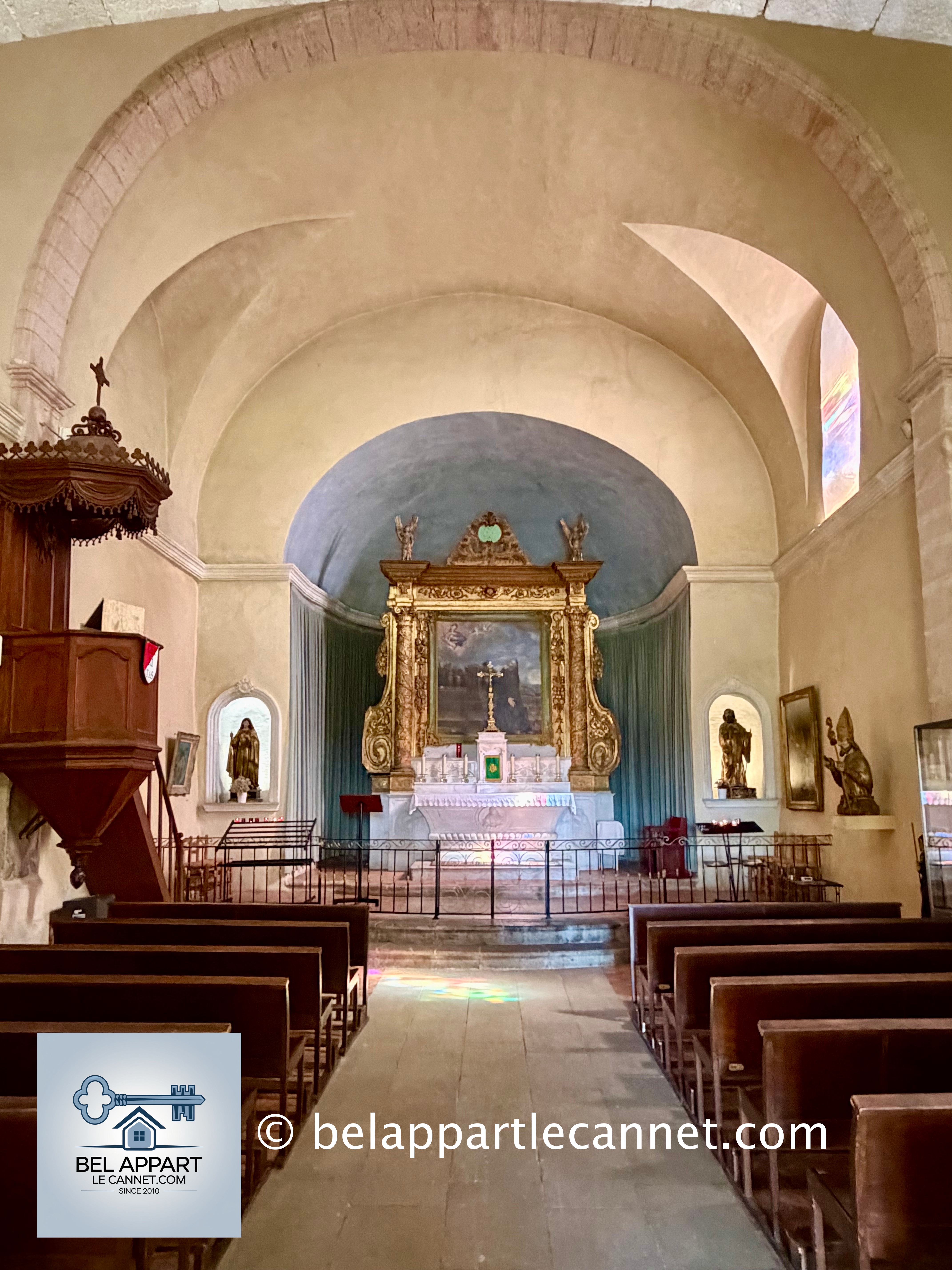
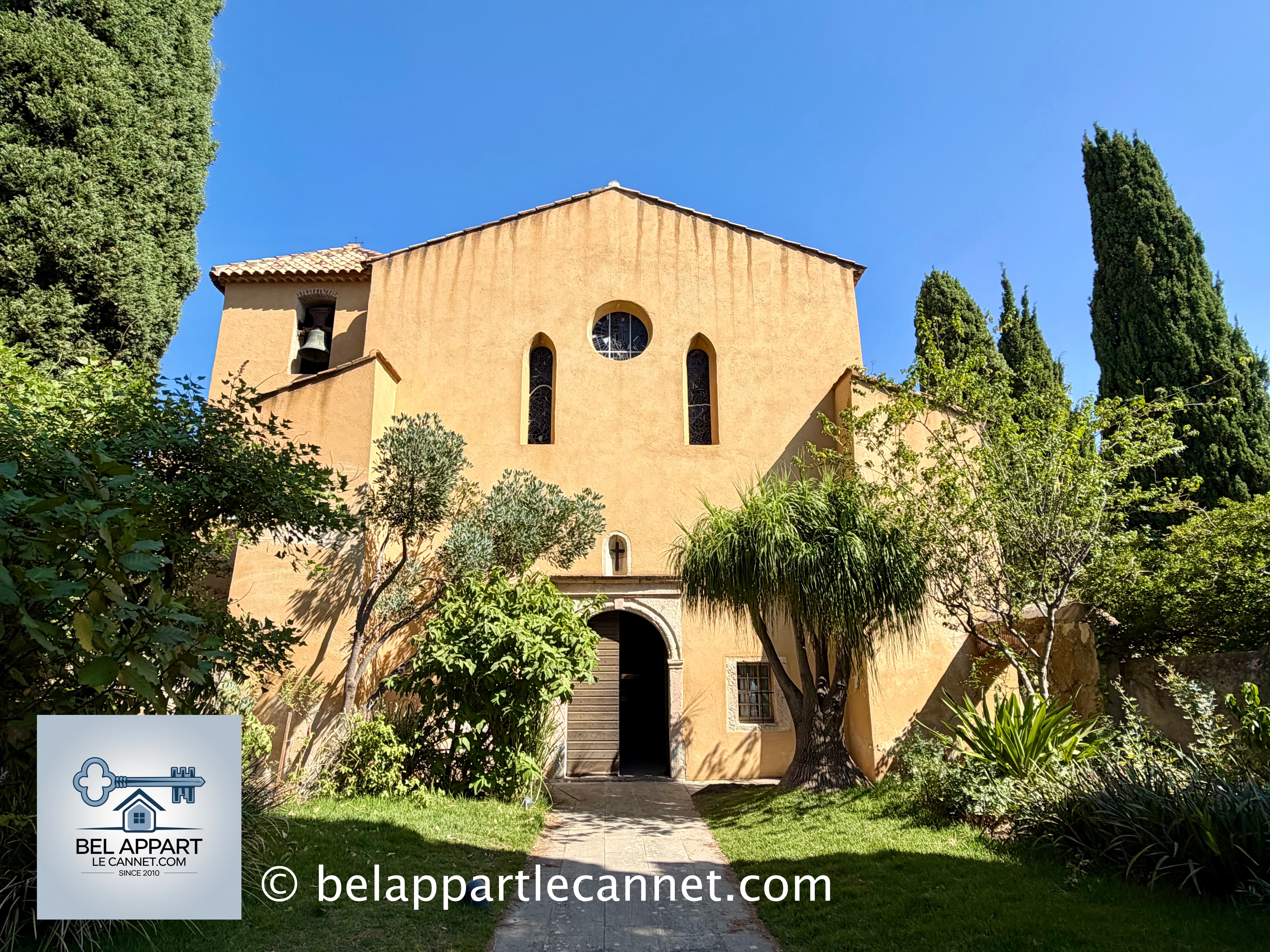
This chapel is another important religious monument in the village.
Located close to Place Saint-François, it complements a visit to Saint-Trophyme Church perfectly. When the village’s former church was no longer suitable and the new Saint-Trophyme Church was still under construction, this chapel temporarily hosted parish services from 1773 onwards.
Place Saint-François also hosts a traditional Provençal market on Wednesday mornings during the season.
Bormes History and Art Museum – MHAB
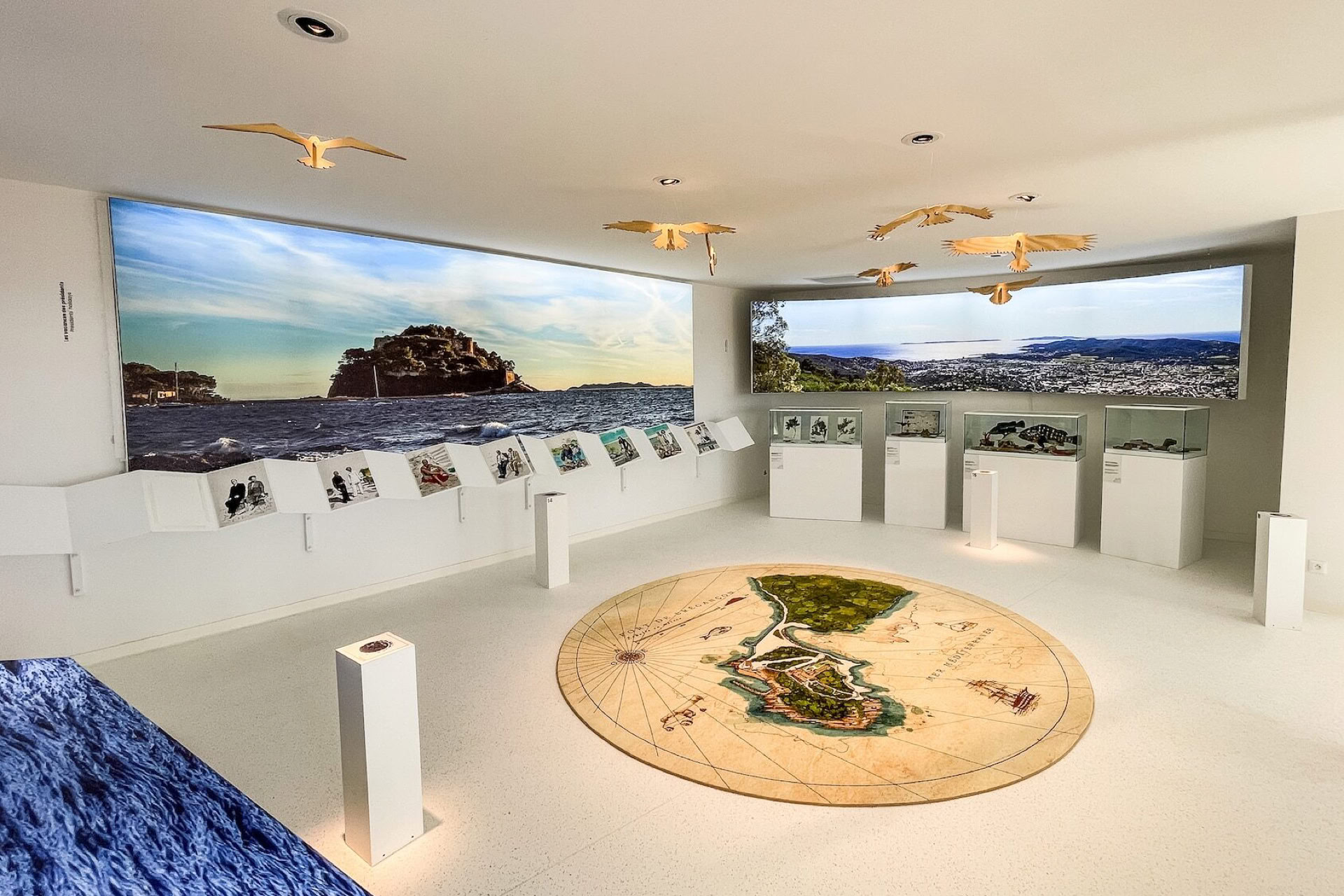
For a truly complete visit, and if you have enough time, I recommend visiting the Bormes-les-Mimosas History and Art Museum (MHAB).
Since 1986, the museum has occupied a former municipal building that served several different purposes over the centuries, including as a school, prison and courthouse in the 18th century.
The building itself is well worth discovering, with its five levels, coffered ceiling, garden and, above all, its panoramic terrace.
The museum takes visitors on a journey through approximately 2,400 years of local history.
One of its most distinctive features today is its immersive approach, using tablets and augmented reality to recreate places, buildings and periods that have long since disappeared.
It is therefore much more than a small museum displaying traditional Provençal objects and is well worth including as part of a full day exploring Bormes-les-Mimosas.
Fountains, Wells and Little Details
Bormes is one of those villages where it is worth looking everywhere as you explore.
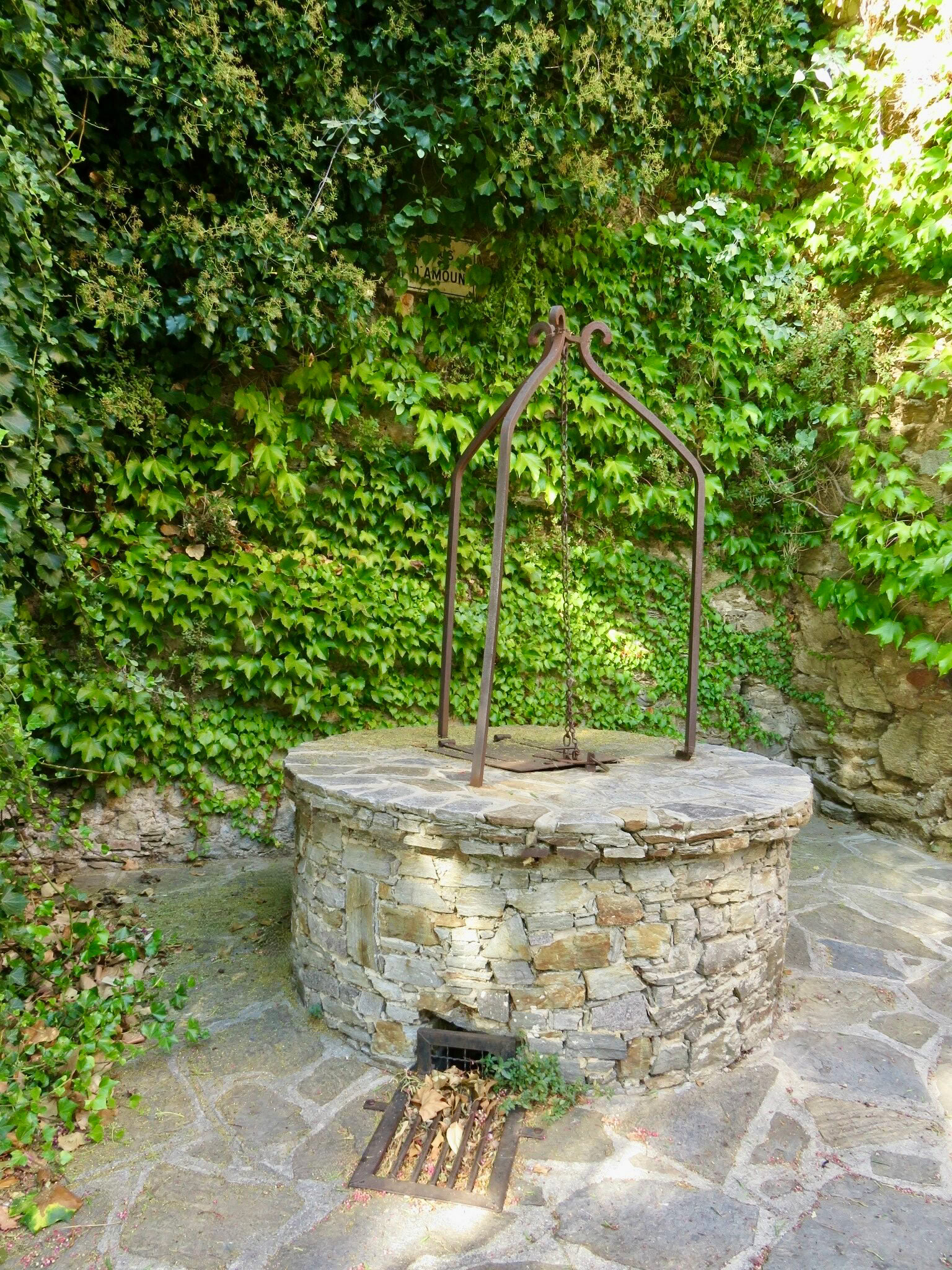
Near Place Saint-François, for example, you will find the Pous d’Amoun, literally meaning the “upper well”, built from dry stone. It once had a counterpart in the lower part of the village, the Pous d’Avau, or “lower well.”
Place Pouverin and Ruelle du Moulin are reminders of Bormes’ agricultural past. Here, you can notably see a large stone millstone and remains associated with an old olive oil mill.
It is this accumulation of small details, fountains, ancient doorways, stone staircases, vaulted passageways, old ramparts, Mediterranean plants and charming little squares, that makes exploring Bormes-les-Mimosas such an enjoyable and rewarding experience.
Bormes, the Village of Flowers
The name Bormes-les-Mimosas truly comes into its own during the winter months.
The most spectacular period to see the mimosa in bloom is generally between January and March. But despite what its name might suggest, Bormes is far from being worth visiting only during the mimosa season.
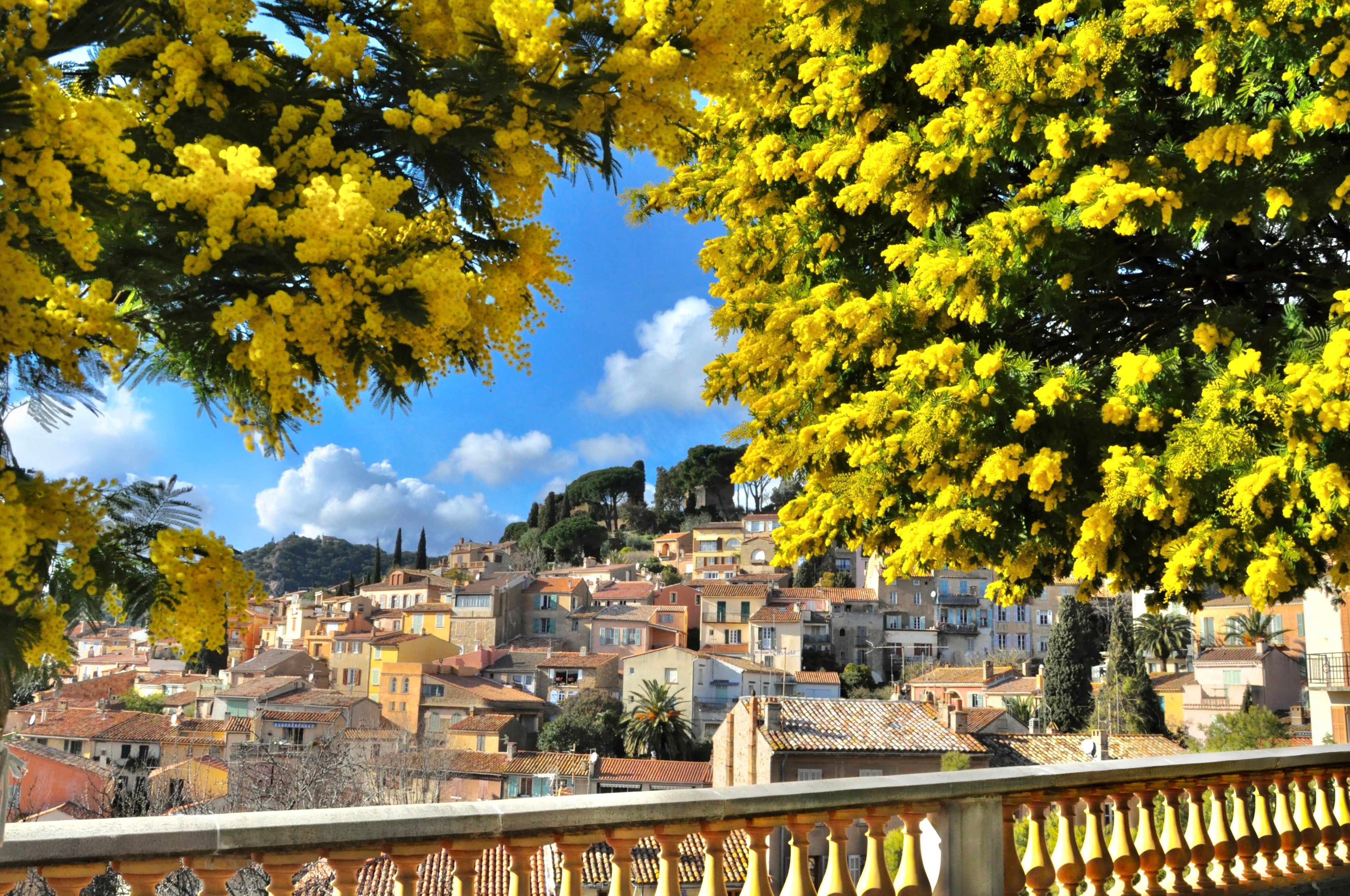
In spring and summer, the façades become covered with colourful bougainvillea, hibiscus and other Mediterranean plants, transforming the narrow streets of the old village.
Vegetation is so closely linked to the identity and charm of Bormes that a walk through the village can almost be considered a visit to a beautiful open-air garden.
For Walkers
Notre-Dame de Constance Chapel
If you have a little more time and enjoy walking, another option is to continue uphill above the village towards the Notre-Dame de Constance Chapel.
From the castle esplanade, follow the Chemin des Oratoires, which forms part of the GR90 long-distance hiking trail and climbs to the chapel, situated at an altitude of around 324 metres.
This walk gradually takes you away from the narrow streets of the village and into the Mediterranean vegetation of the Massif des Maures, while gaining even more height and offering beautiful views over the coastline.
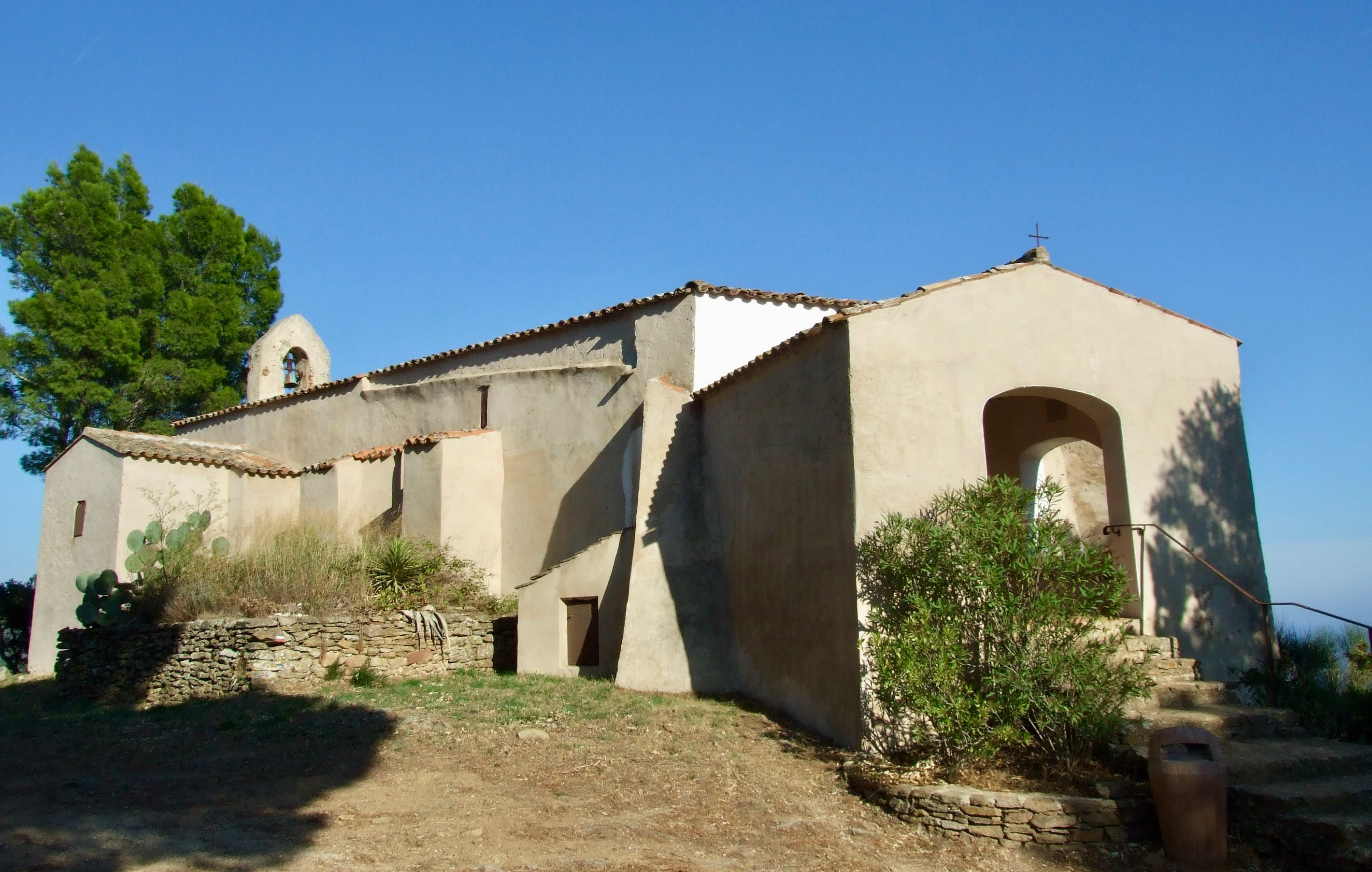
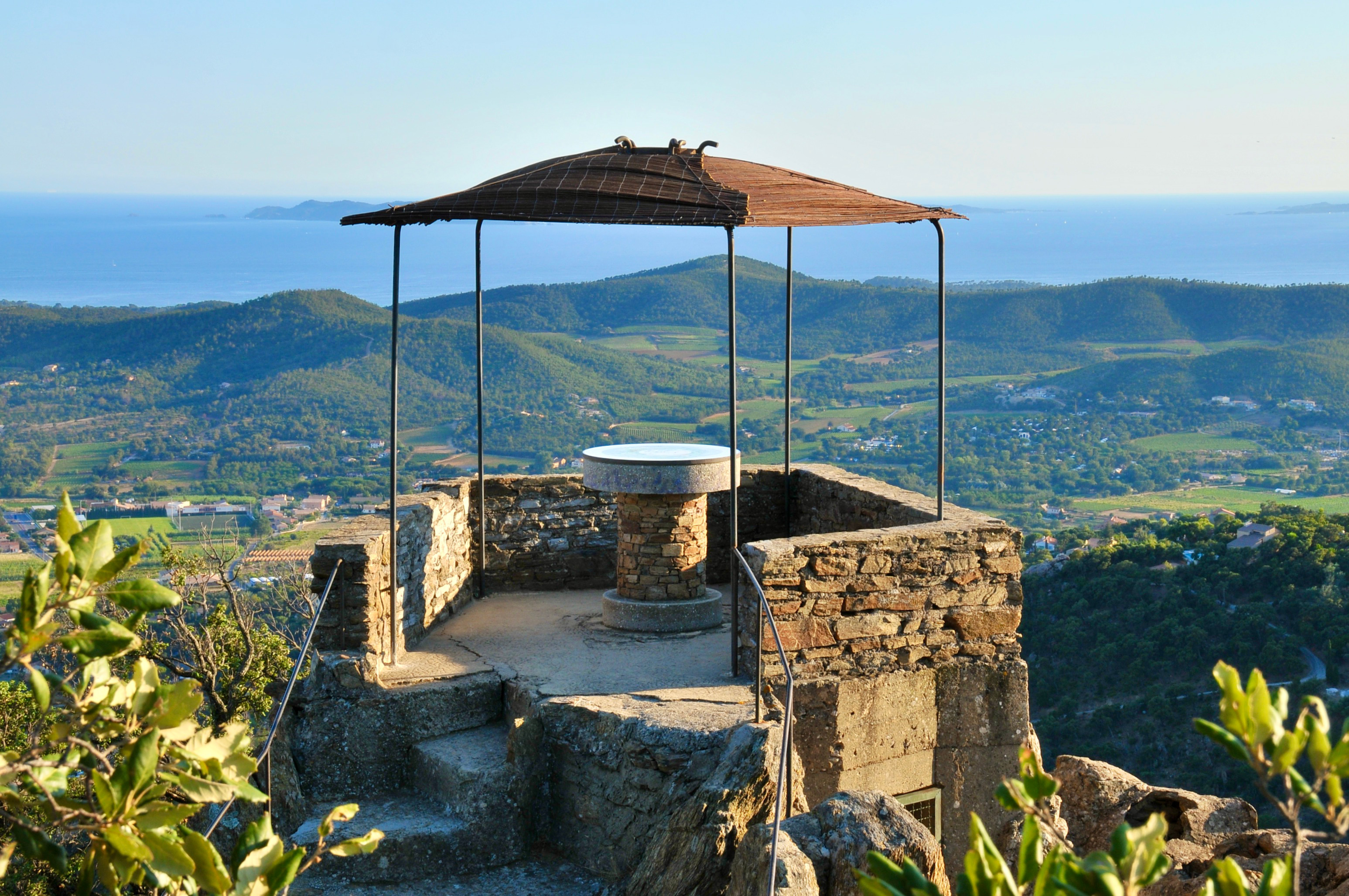
From up there, you can enjoy a magnificent panoramic view overlooking the entire coastline and the Mediterranean Sea.
The walk to Notre-Dame de Constance Chapel is an easy 3.9 km circular route, taking around 2 hours, with approximately 205 metres of elevation gain.
In the old village of Bormes-les-Mimosas, several restaurants offer the perfect opportunity to extend your visit with a pleasant lunch or dinner. Some of the most interesting places to eat are concentrated around Place Gambetta, Rue Carnot and the narrow medieval streets of the historic centre.
This is probably one of the most charming restaurants in old Bormes for those looking for both a beautiful setting and carefully prepared cuisine.
The restaurant is tucked away in a picturesque little street and features a superb terrace set in a leafy garden, complete with a fountain, pergola, flowers and lush Mediterranean vegetation.
Chef Riccardo Berto offers modern cuisine inspired by the flavours of Provence and the Mediterranean, prepared using seasonal ingredients.
The restaurant is included in the Michelin Guide selection, which particularly highlights its delightful garden terrace and contemporary Mediterranean cuisine.
Provençal cuisine - €€€
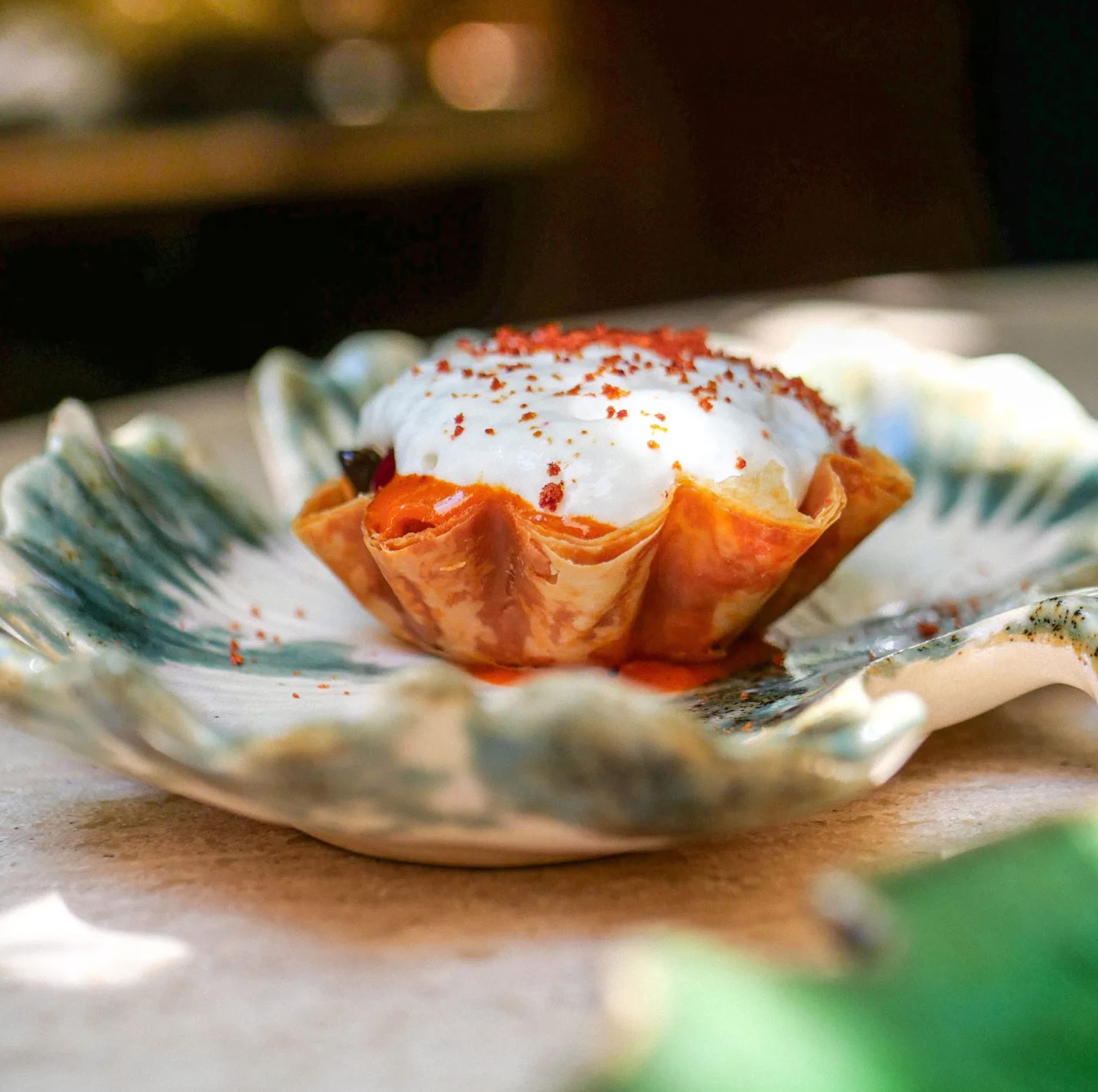
Lou Portaou is a traditional restaurant located in a historic old building just a few steps from the church.
It is particularly known for its Mediterranean, Provençal and French cuisine, prepared with seasonal ingredients and served in a warm and romantic setting.
The restaurant offers refined dishes made with fresh produce, in an atmosphere that is both elegant and welcoming.
Provençal cuisine - €€€
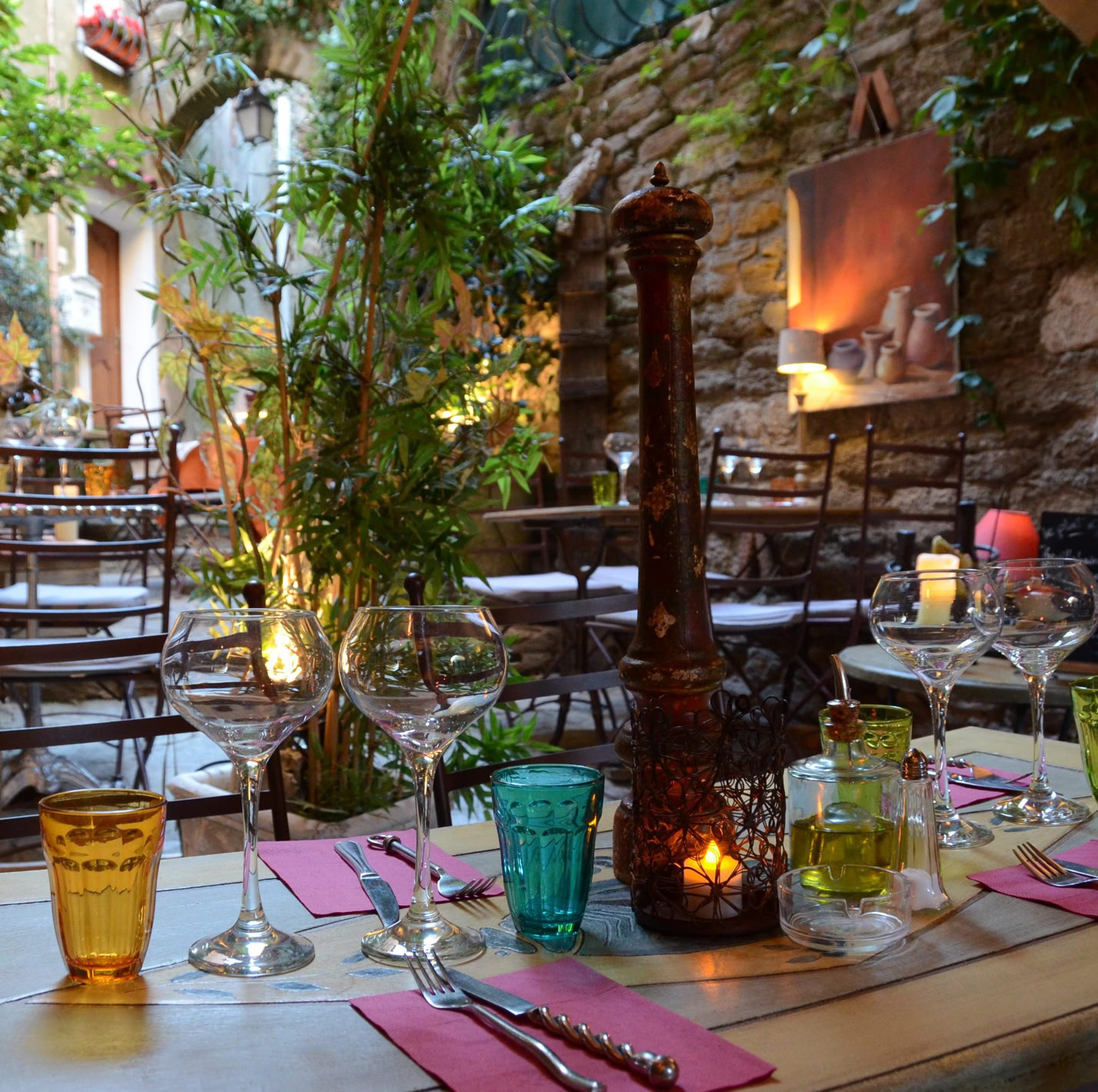
Le Petit Café de la Cueva is a restaurant, wine bar and tapas bar.
It is located on the charming Place du Poulid Cantoun, the “pretty corner” mentioned earlier in our tour of the village, close to the Clock Tower and the remains of the old medieval ramparts.
This is a more relaxed and informal place to eat, with prices generally more affordable than those of the village’s gastronomic restaurants.
The service is quick, the welcome is warm and friendly, and the portions are generous.
Tapas and sharing platters - €€
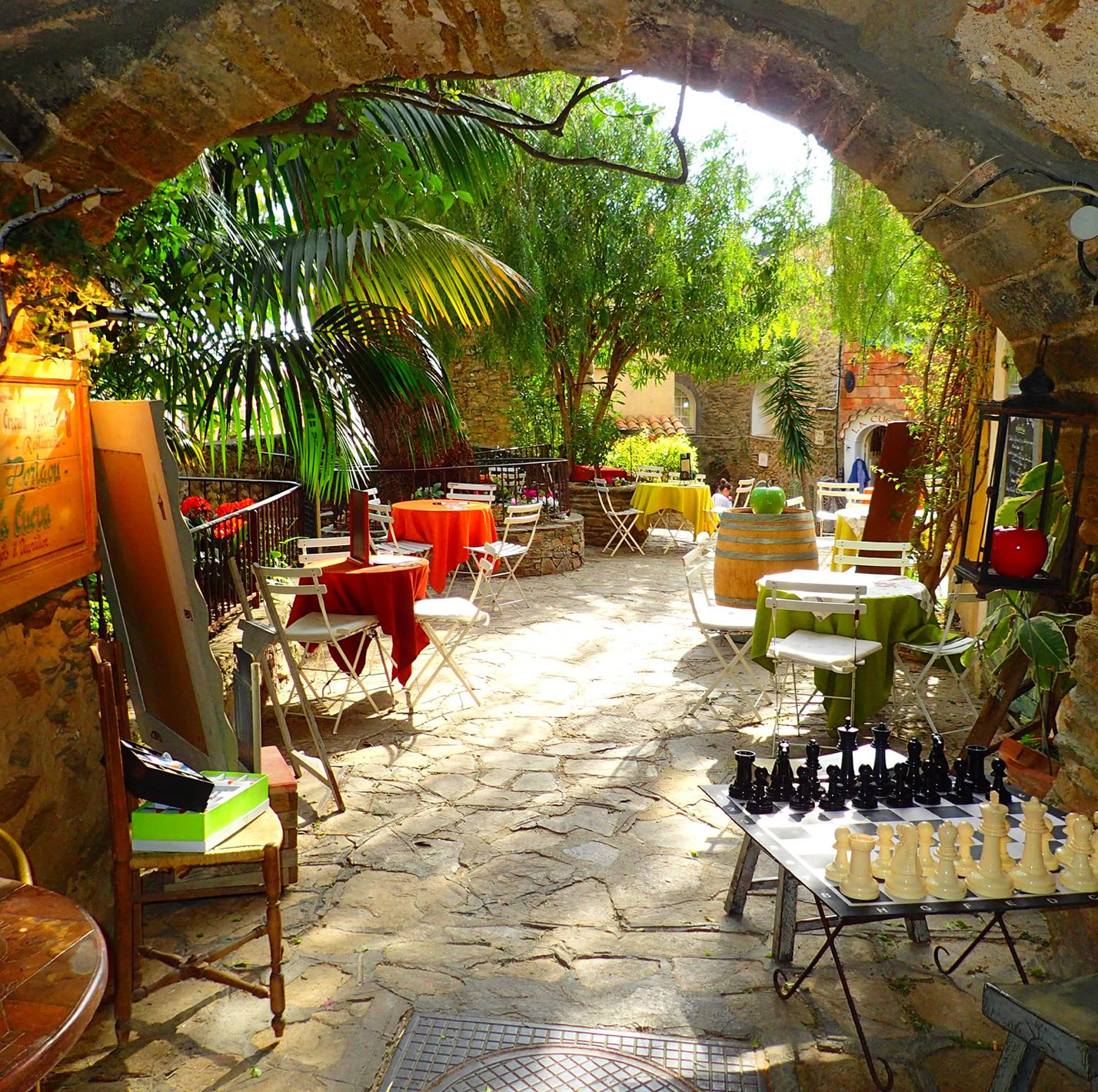
Less touristy than Saint-Tropez, Bormes-les-Mimosas is undoubtedly one of the most beautiful villages to discover during a day trip in the Var.
This charming medieval village immediately captivates visitors with its cobbled lanes, vaulted passageways, old houses and beautifully flower-filled façades.
Take the time to lose yourself in its narrow streets, discover its charming little squares, and then settle down on the terrace of a restaurant in the old village to enjoy the atmosphere and scenery for a little longer.
A wonderful escape combining history, flowers, the charm of Provence and the Mediterranean, a place I highly recommend discovering.
How to Get to the Village of Bormes-les-Mimosas
By car: 109 km – approximately 1 hr 40 min
For more information: www.bormeslesmimosas.com
Ce site web utilise les cookies. Veuillez consulter notre politique de confidentialité pour plus de détails.